
What Happens If Sleep Apnea Goes Untreated?
Key Takeaways
Sleep apnea causes repeated pauses in breathing during sleep, which can prevent you from getting enough oxygen and restorative sleep.
Untreated sleep apnea can have serious health consequences, including cardiovascular, metabolic, cognitive, and mood-related issues.
Treatment options may include custom dental appliances, lifestyle changes, and other therapies depending on the type and severity of the condition.
An at-home sleep test, such as WatchPAT, can help diagnose sleep apnea without requiring an overnight stay at a sleep center.
What Are The Dangers Of Sleep Apnea?
Sleep apnea is a condition in which breathing stops for several seconds, multiple times a night. People who suffer from sleep apnea are often chronic snorers who may also experience symptoms such as:
Frequently waking while choking or gasping for air
Feeling unrested in the morning
Excessive daytime fatigue
Frequent morning headaches
Chronic sore throat or dry mouth
If you are experiencing any of the symptoms of sleep apnea, please contact Fairfax Family Dentist Dr. Pamela Marzban online or call our office at 703-323-8200 to schedule a treatment consultation today.
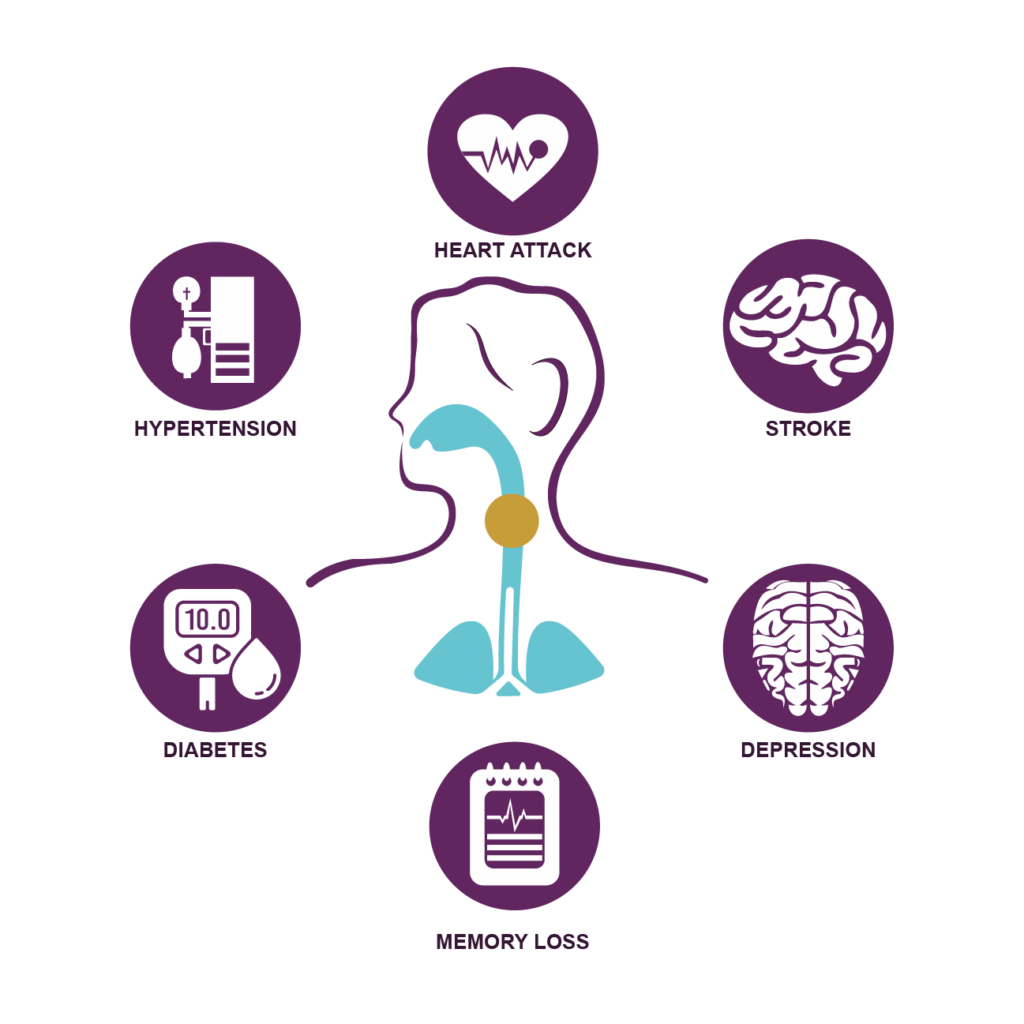
Untreated Sleep Apnea
Sleep apnea treatment is very effective, but most people with the condition don’t know they have it or they avoid treatment. But treating sleep apnea is vital. People with sleep apnea may be up to six times more likely to die an early death. That’s because sleep apnea can dramatically impact your health in many ways, causing:
Cardiovascular damage
Metabolic disruption
Cognitive and mood disorders
Fortunately, because sleep apnea causes all these conditions, treating sleep apnea can improve them all as well.
Obstructive Sleep Apnea & Heart Failure
When your air supply gets cut off, your brain seeks to restore its supply of oxygen. It does this partly by awakening to reopen the airway, but it also tells your heart to pump harder and faster. This can increase your blood pressure and may cause other forms of cardiovascular illness. Cardiovascular death is the most common cause of death linked to sleep apnea.
People with sleep apnea are at an elevated risk for these cardiovascular illnesses:
Coronary artery disease
Stroke
Heart attack
Hypertension
Even simple snoring can contribute to cardiovascular risk. Snoring vibrations can cause tiny injuries in the blood vessels, which scar and lead to hardening of the arteries.
What Is The Relationship Between Sleep Metabolism & Sleep Apnea?
Sleep is vital for the regulation of your body’s metabolism. When your sleep is disrupted, your metabolism can be, too. As a result, if you have sleep apnea, you might experience:
Weight gain
Difficulty losing weight
Diabetes
Weight gain can be particularly difficult to deal with because obesity contributes to your sleep apnea risk. But it can be hard to lose or even maintain your weight if you have sleep apnea.
How Do Sleep Patterns Affect Mood Disorders?
Your brain relies on regenerative sleep perhaps more than any other organ in the body. When your sleep is disrupted, you might experience consequences like:
Memory problems and early onset dementia
Difficulty focusing (or staying awake)
Depression and other mood disorders
These can put you and others at risk. People with sleep apnea have an elevated risk of dangerous or deadly car accidents. They can be violent, and may harm others or themselves.
How Do You Treat Sleep Apnea?
Dr. Marzban offers customized dental appliances that can help keep airways open and allow for a full and restful night’s sleep. She may also recommend lifestyle changes to enhance treatment and help ensure lasting relief. What is best in your situation will be discussed in greater detail during your sleep apnea treatment consultation.
Sleep Apnea Dentist Serving Burke, Northern Virginia, Fairfax & Surrounding Areas
To schedule your sleep apnea treatment consultation, please contact our experienced Fairfax dentist today. Dr. Marzban utilizes WatchPAT™ for in-home sleep apnea diagnosis for patients.
FAQs
-
Sleep apnea is a sleep disorder where breathing repeatedly stops and starts during sleep, reducing oxygen levels and disrupting rest.
-
The three types are obstructive sleep apnea (OSA), central sleep apnea, and complex (mixed) sleep apnea.
-
Common causes include airway obstruction, obesity, enlarged tonsils, smoking, alcohol use, and certain medical conditions affecting breathing.
-
Loud snoring, gasping or choking during sleep, daytime fatigue, morning headaches, poor concentration, and irritability are common symptoms.
-
Treatment options include CPAP therapy, oral treatments, lifestyle changes, and in some cases, surgery.
-
In some cases, weight loss or lifestyle changes can reduce symptoms, but many people require ongoing treatment.
-
You should see a doctor if you snore loudly, feel excessively tired during the day, or wake up gasping for air.