
What's the Difference Between Composite & Porcelain Veneers?
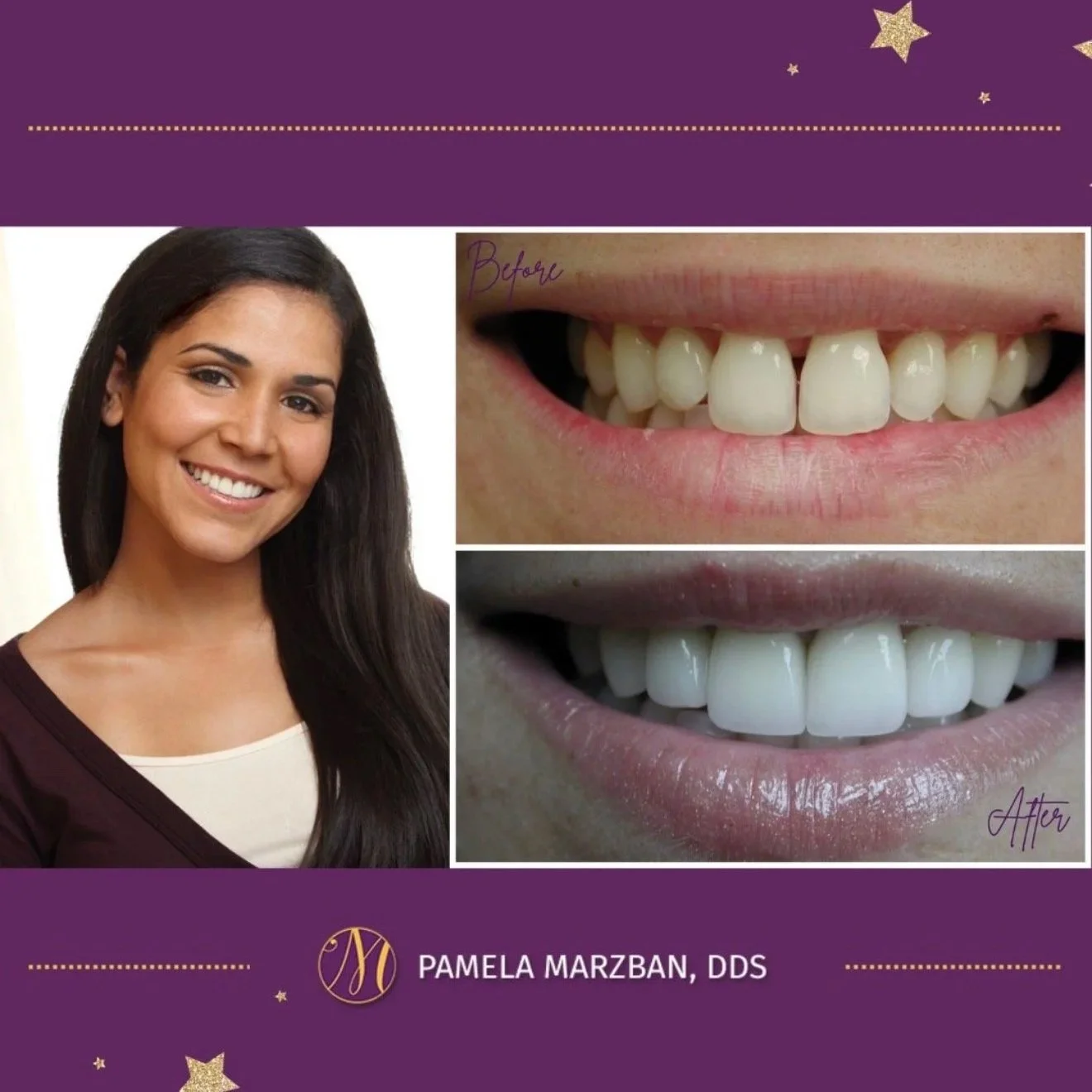
A confident smile can change the way you interact with others. Beyond how others perceive you, a confident smile can also influence how you feel internally. When you’re not worried about hiding your teeth or holding back your expressions, you can be more present and authentic.
If you have a chipped tooth, stained or misaligned teeth, cosmetic dentistry offers several solutions. One of the most popular treatments for a beautiful smile is dental veneers. Veneers improve the color, shape, and appearance of your teeth, for a beautiful smile. If you’re looking into dental veneers, composite and porcelain both can transform your smile, but they differ in what materials they use, durability, appearance, and application.
What Are Porcelain Veneers?
Porcelain veneers are thin, custom-made shells of dental ceramic that are bonded to the front surface of your teeth to improve their appearance.
Porcelain Veneer Materials
If you want the most natural-looking smile, porcelain veneers are the best option. They’re made from high-quality porcelain, are really durable, stain-resistant, and have a natural light-reflecting quality so they look natural.
Porcelain Veneer Application
Getting porcelain veneers takes longer than composite veneers. The process usually takes two to three visits over a couple of weeks. During your first visit, Dr. Marzban will remove a very thin layer of enamel from your teeth to make room for the veneer. Next, an impression or digital scan of your teeth is taken and sent to a dental lab. While your custom veneers are being designed at the lab, you’ll wear temporary ones. Once the veneers arrive, Dr. Marzban will bond them to your teeth.
Porcelain Veneer Durability
With proper care, porcelain veneers can last 10 to 15+ years. The ceramic material resists wear and tear well, so porcelain veneers are a great investment in your long-term oral health and smile.
What Are Composite Veneers?
Composite veneers are made from a tooth-colored resin material, similar to what’s used in dental fillings, and are applied directly onto the teeth, then sculpted and polished in real time for a natural-looking finish.
Composite Veneer Materials
Composite resin has a slightly more porous surface than porcelain. These micro-pores can absorb pigments from coffee, tea, and red wine, which may lead to staining and a duller appearance over time.
Composite Veneer Application
The entire process can usually be completed in one visit. The resin is applied directly to your teeth, shaped to the desired contour, and then hardened using a high-intensity light.
Composite Veneer Durability
Composite veneers usually last between 5 and 7 years. Because the resin is not as strong as porcelain, it’s more susceptible to chipping.
Which Type of Dental Veneers is Right For You?
Choosing the right type of dental veneers depends on your preferences and oral health goals.
Porcelain veneers are best if you:
Want natural-looking results.
View your smile as a long-term investment and want materials that will last over a decade.
Want a stain-resistant solution.
Need to correct more severe discoloration, spacing, or alignment issues.
Composite veneers are best if you:
Want immediate results.
Prefer a minimally invasive procedure that preserves your natural enamel.
Only need to fix minor chips or slight discoloration on a few teeth.
Porcelain Veneers at Marzban, DDS in Burke, Fairfax & Northern Virginia
Dr. Marzban is a top cosmetic dentist specializing in porcelain veneers. Contact Marzban, DDS at 703-323-8200 or fill out our online form to schedule an appointment. We serve Burke, Fairfax, Fairfax Station, and Northern Virginia, and are conveniently located in the Kings Park Professional Building.
FAQs
-
Caring for porcelain veneers is the same as taking care of your natural teeth. It’s important to avoid habits that can damage veneers such as biting on hard objects like ice, pens, popcorn kernels, or fingernails.
-
No, porcelain veneers cannot be whitened with traditional teeth whitening treatments. Whitening products are designed to lift stains from natural tooth enamel, but porcelain is a non-porous material that doesn’t respond to bleaching agents.
-
Porcelain veneers are highly resistant to staining and are much less likely to discolor than composite veneers. Their smooth, non-porous surface helps prevent stains, but it’s important to maintain good oral hygiene because the natural teeth and gumline around them can still be affected by discoloration over time.
-
Both types of veneers are designed to look natural, however, porcelain veneers give the most natural appearance due to their ability to reflect light similarly to natural tooth enamel.
-
Getting veneers is typically not painful. Most patients experience little to no discomfort during the procedure because a local anesthetic is used while the teeth are being prepared. After the treatment, it’s common to have mild sensitivity for a few days, especially to hot or cold foods, but this usually fades quickly.